Picture credits
The drawings are our own. The photos are from Wikimedia Commons under Creative Commons licences (Attribution, or Attribution-ShareAlike).
Photos
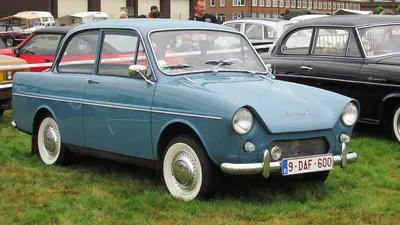 Daf 600 (ca 1961) at Schaffen-Diest 2013.JPG
by Charles01, CC BY-SA 3.0. Cropped and resized; no other changes. Shared here under the same licence.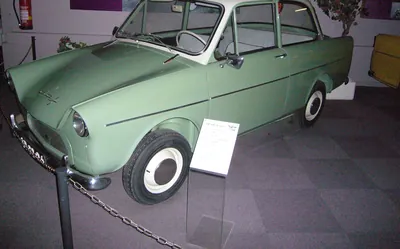
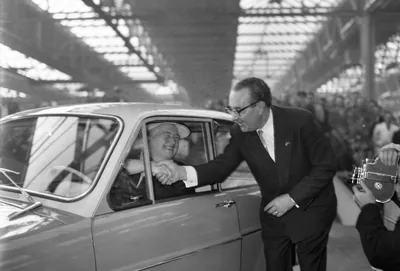 NL-HaNA 2.24.01.04 0 910-2387 Huub van Doorne.jpg
by Joop van Bilsen / Anefo, Nationaal Archief, CC BY 4.0. Cropped and resized; no other changes.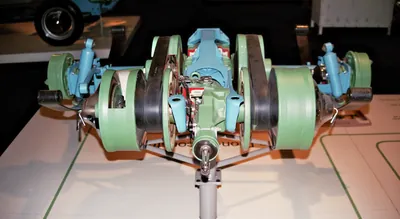 Dafmuseumdag Open model van de variomatic (22358756975).jpg
by m66roepers, CC BY 2.0. Cropped and resized; no other changes.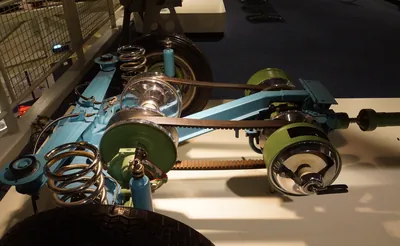 DAF Musem, Eindhoven (16496647510).jpg
by Ronald van der Graaf, CC BY 2.0. Cropped and resized; no other changes.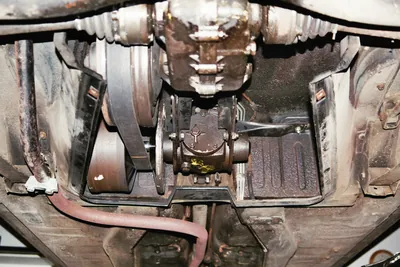 Variomatic van de Daf 46 (21983079312).jpg
by m66roepers, CC BY 2.0. Cropped and resized; no other changes.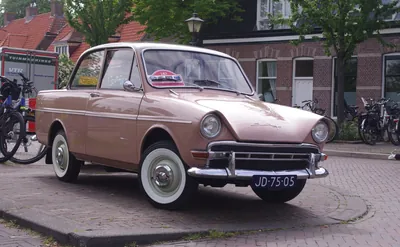
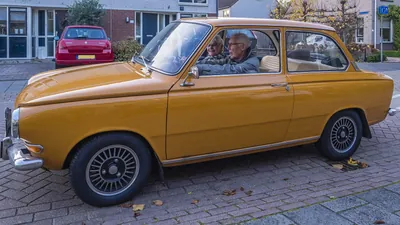 DAF 44 Variomatic - omgeving Gouda (22982695013).jpg
by Frans Berkelaar, CC BY-SA 2.0. Cropped and resized; no other changes. Shared here under the same licence.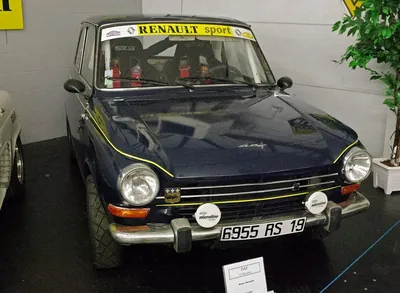 Valençay (Indre) (20840668886).jpg
by Daniel Jolivet, CC BY 2.0. Cropped and resized; no other changes.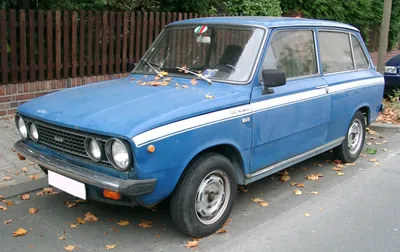 DAF 66 front 20071012.jpg
by Rudolf Stricker, CC BY-SA 3.0. Cropped and resized; no other changes. Shared here under the same licence.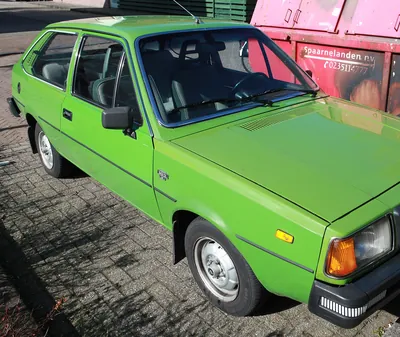 Volvo 343 DL 1.4.jpg
by Joost J. Bakker (cropped and plates blurred by Mr.choppers), CC BY 2.0. Cropped and resized; no other changes.
Our own drawings
- Simplified top view of a DAF 600: the air-cooled flat-twin engine at the front, an automatic clutch, a drive shaft running back to the primary box, a pair of front pulleys on each side of that box, and two V-belts running back to a rear pulley at each rear wheel.
Our own drawing - Two simplified drawings of a belt running round a front and a rear pulley. Pulling away: the front pulley’s discs are apart so the belt runs on a small circle, while the rear pulley’s discs are together so it runs on a large circle. Cruising: the reverse, a large circle at the front and a small one at the rear. Below each pulley, a cross-section shows the belt sitting low between discs that are apart, or high between discs that are together.
Our own drawing - Diagram of the forces on the front pulley’s sliding disc. Pushing the discs together to change up: spinning weights as engine speed rises, and suction in the outer chamber at light throttle. Pulling them apart to change down: the pull in the belt on hills and under load, full throttle for a kick-down, and suction in the inner chamber for engine braking downhill. At the rear pulleys, springs keep the belts squeezed.
Our own drawing - Bar chart of quoted overall ratios: Bill Vance gives 20 to 1 pulling away to 4.4 to 1 for the DAF 600; Hemmings gives 14.22 to 1 to 3.60 to 1 for a later range; the DAF Club gives 3.60 to 1 up to 28.83 to 1 across all models.
Our own drawing - Bar chart: DAF’s launch claim that belts were tested to last at least 50,000 miles (80,000 km), against DAF’s 1966 statement that the average car ran over 20,000 miles before the belts were renewed.
Our own drawing - Bar chart of production years: DAF 600 1959 to 1963, 750 1961 to 1963, Daffodil 1961 to 1967, 44 1966 to 1974, 33 1967 to 1974, 55 1967 to 1972, 66 1972 to 1975, 46 1974 to 1976, Volvo 66 1975 to 1980, Volvo 343 1976 to 1982, Volvo 340 1982 to 1991.
Our own drawing
The drawings are simplified teaching drawings, not to scale, made from the sourced descriptions on this site. Useless the eraser is the network’s own mascot. Fonts: Bricolage Grotesque, Newsreader and Kalam (SIL Open Font Licence), served from this site.